
Cart 0
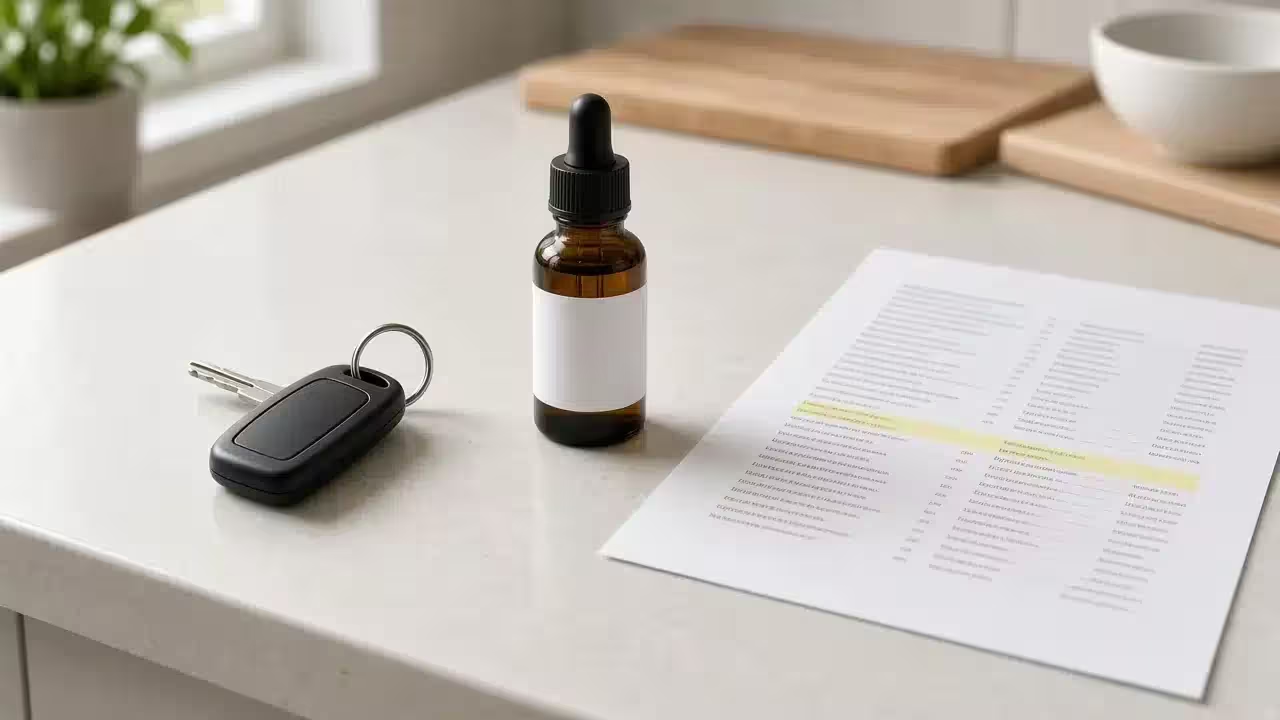

Quick answer: UK drug-driving law covers being unfit to drive because of drugs, and having certain drugs above specified limits in your blood. THC, the main intoxicating compound in cannabis, is on GOV.UK’s list; CBD is not named. Some CBD products can contain THC, and no label can tell you you’re fit to drive. This is general information, not legal advice.
Can you drive on CBD? It is a sensible question to ask before you get behind the wheel. The honest answer depends on what the law covers, what is actually in the product and whether you are fit to drive. This guide explains the drug-driving rules on GOV.UK, why THC content matters and what to check. It cannot tell you that you are fit to drive.
Can you drive on CBD oil in the UK?
Do not drive if a substance or medicine makes you unfit to do so. Being sold legally does not mean a product cannot affect your driving.
GOV.UK’s drugs and driving law page sets out two separate rules. It is illegal to drive if you are unfit to do so because you are on legal or illegal drugs. It is also illegal to drive with certain levels of illegal drugs in your blood, even if they have not affected your driving.
The government’s table of drugs and limits includes delta-9-tetrahydrocannabinol (THC), the main intoxicating compound in cannabis. CBD (cannabidiol) is not named in that table. That does not mean a CBD product is suitable to drive on: the impairment rule still applies, and some CBD products can contain THC.
The GOV.UK page covers England, Scotland and Wales. It says the law does not cover Northern Ireland, but that you could still be arrested if you are unfit to drive. Check the rules for where you will drive.
Whether a CBD product can be sold legally is a different question from whether you can drive. Our UK CBD law guide covers the product rules.
CBD and driving in the UK: why THC content matters
CBD and THC are different cannabinoids. THC is the intoxicating compound linked to the high from cannabis, and it is a controlled drug in the UK. Our guide does CBD make you high? explains the difference in more detail.
For drivers, the practical question is what is in the bottle. The spectrum label gives you the first clue:
- Full spectrum: the extract keeps a wider range of the hemp plant’s naturally occurring compounds and may contain trace THC.
- Broad spectrum: the extract is processed further to remove or reduce THC while keeping other compounds.
- CBD isolate: CBD on its own, without other cannabinoids.
A spectrum label describes the extract type; it is not a measurement. The batch lab reports for our oils show what was tested for each batch, including the THC row. Match the batch number on your bottle to its report.
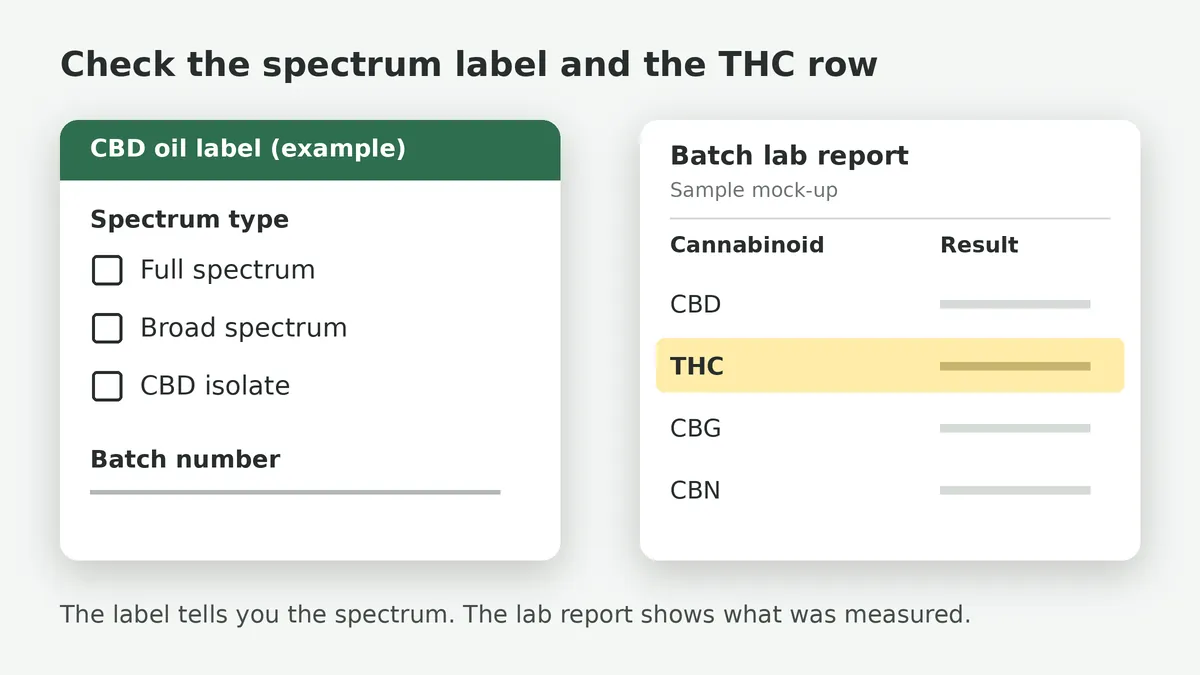
A lab report tells you about a product batch. It does not tell you what is in your blood or whether you are fit to drive. GOV.UK states: “The government is unable to provide any guidance on what amounts of dosage would equate to being over the specified limits.” It gives the reason as too many variables, including how each person metabolises a drug, so we do not offer an amount either.
Can you drive after taking a CBD gummy?
The format does not change the rules. A gummy, a capsule and an oil are judged the same way: the law looks at whether you are fit to drive and at specified drugs such as THC, not at the type of product you took.
So the checks are the same too. Read the gummy’s label for its spectrum type and CBD content, and look for a batch lab report that matches the pack. Do not use this article to calculate a “safe” amount or a waiting period before driving. A general product description cannot establish that you are fit to drive or predict a test result.
Roadside drug tests and CBD
GOV.UK says the police can ask you to do a field impairment assessment if they think you are on drugs, and can use a roadside drug kit to screen for cannabis and cocaine. Some CBD products can contain trace THC, so no retailer can promise a test outcome.
For more on testing, including workplace tests, read our guide: does CBD show up on a drug test?
Prescribed cannabis-based medicines are different
GOV.UK guidance describes a medical defence for people taking medicine in line with instructions from a healthcare professional or the accompanying leaflet, provided they are not impaired. It does not permit impaired driving.
A shop-bought CBD oil is not a prescription. Over-the-counter CBD oils, capsules and gummies are sold as food supplements, not medicines, so do not assume that rules discussed for prescribed medicines apply to them. If you have been prescribed a cannabis-based medicine, ask your prescriber or pharmacist about driving. GOV.UK also says that if you drive and take prescription medicine, it may be helpful to keep evidence of this with you in case you are stopped by the police.
Before you drive: a checklist
Run through these points before every journey, not just the first time you use a new product.
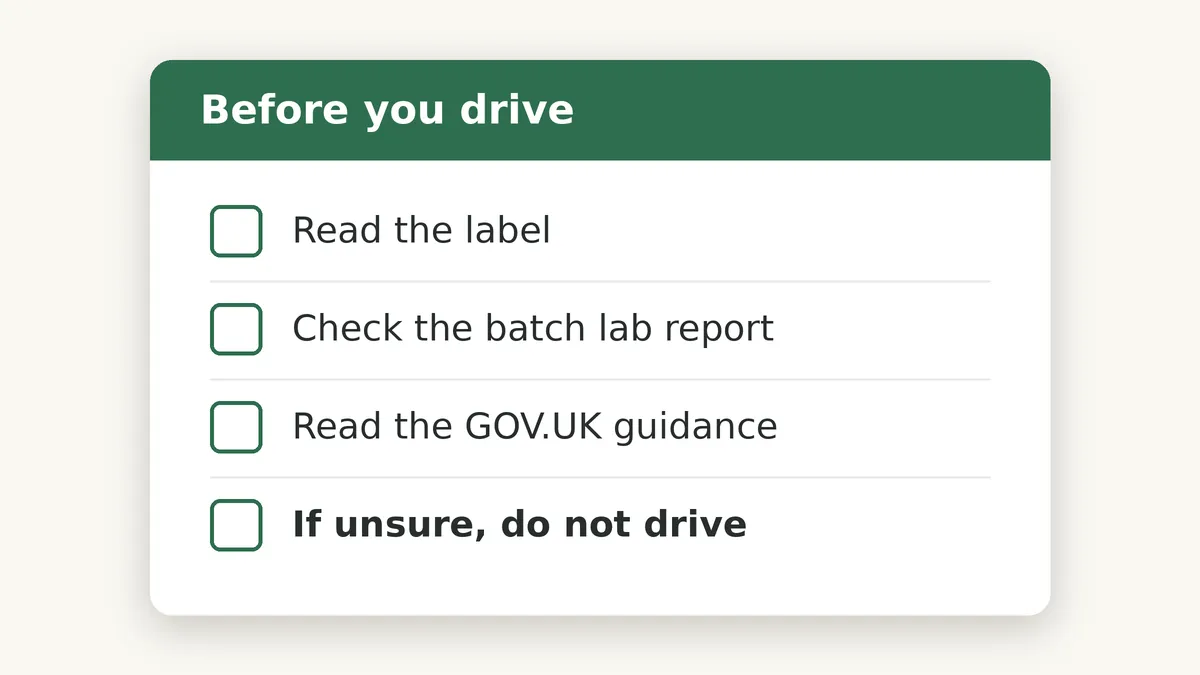
- Consider whether you feel impaired or have been told not to drive.
- Read the product or medicine instructions and warnings.
- Check the batch lab report for the product you are using.
- Ask a pharmacist or prescriber about relevant medicine questions.
- Check the official guidance rather than relying on an anecdote about someone else’s test.
If you are uncertain about your fitness to drive, do not drive while that uncertainty is unresolved.
Want to see what’s in a product before you buy? Each CBD Armour oil listing shows its spectrum type, and batch lab reports are published. Browse our CBD oil range.
Frequently asked questions
These answers cover labels, lab reports and where to find the official rules.
Is CBD the same as THC?
No. CBD and THC are different cannabinoids found in the cannabis plant. THC is the intoxicating one, and it is a controlled drug in the UK. Some CBD products can contain trace THC, depending on how they are made, so check the batch lab report. Our guide Does CBD make you high? explains the difference.
What does “full spectrum” mean on a label?
Full spectrum means the extract keeps a wider range of the hemp plant’s naturally occurring compounds, rather than CBD alone. A full-spectrum product may contain trace THC. The label tells you the extract type, but it is not a measurement, so check the batch lab report for the THC result and make sure the batch number matches your bottle.
Where can I find the lab report for my CBD Armour batch?
On our batch lab reports page. Find the report that matches the batch number printed on your bottle, then read the THC row to see what was measured for that batch. If you cannot find a report for your batch, contact us before use.
Where can I read the official UK drug-driving rules?
On GOV.UK. The drugs and driving law page explains the impairment rule and the specified limits, and links to the table of drugs and limits. It covers England, Scotland and Wales. It says the law does not cover Northern Ireland, but that you could still be arrested if you are unfit to drive.
Is this legal advice?
No. This guide is general information for UK drivers about what the law covers and what to check on a CBD product. It is not legal or medical advice, and it cannot tell you whether you are fit to drive. For a specific situation, use the official GOV.UK guidance or speak to a qualified adviser.
Disclaimer: This guide is general information for UK drivers. It is not legal or medical advice and cannot tell you whether you are fit to drive. If in doubt, don’t drive.